Diagnostic Summary: Over 70% of sudden wire-bonding yield drops—Non-Stick on Pad (NSOP), Non-Stick on Lead (NSOL), ball lift, and erratic wire-pull failures—trace to four measurable mechanical or surface faults rather than recipe parameters: contaminated bond pads or oxidized leadframes, loose window clamping allowing ultrasonic energy absorption, worn/chipped ceramic capillaries, or ultrasonic transducer impedance drift. Always verify hardware baseline measurements before tweaking bond power or force.
- First Check on NSOP: Verify heater block temperature (±2°C), window clamp hold-down flatness, and pre-bond plasma cleaning queue time (< 4–8 hours).
- First Check on Short-Tail / EFO Open: Inspect wire clamp air-gap/tension, EFO spark electrode buildup, and copper forming-gas flow stability.
- Transducer Red Flag: Rising resonant impedance (> 25–35 Ω) or cracked horn mounting screws require transducer swap or ultrasonic generator calibration.
Why Blindly Raising Ultrasonic Power Makes Wire-Bond Defects Worse
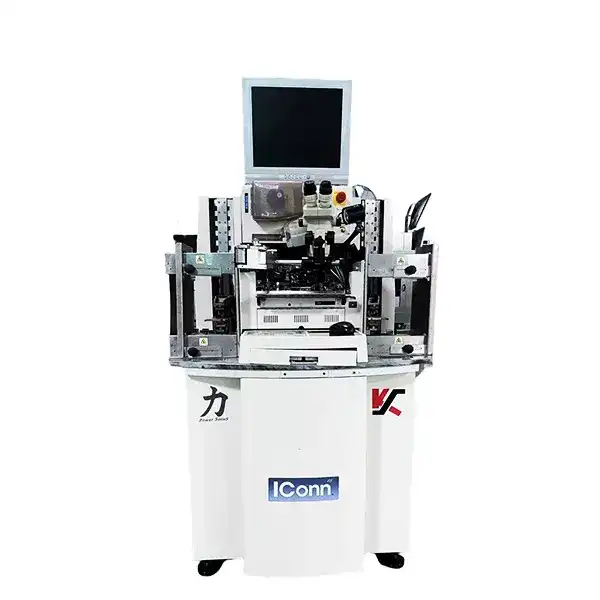
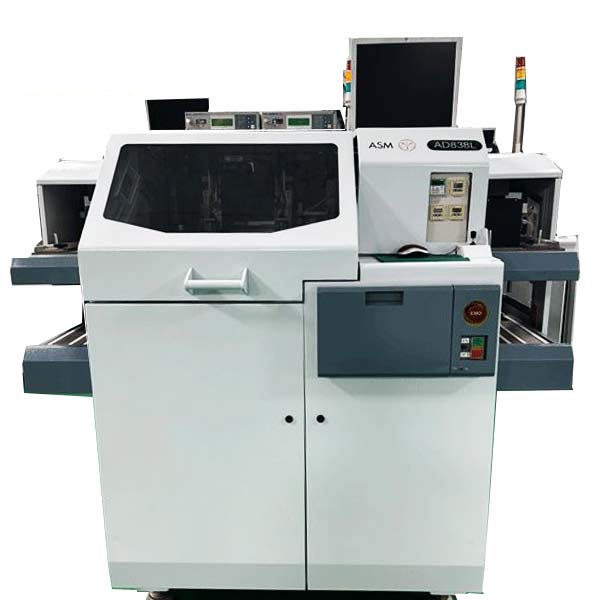
When NSOP or low ball-shear readings hit a production shift on a K&S IConn, ASMPT Eagle, or Kaijo wire bonder, the most damaging habit on the floor is cranking ultrasonic power up by 15–20% to "force the bond to stick." Higher power temporarily masks a dirty leadframe or a loose window clamp—until 48 hours later when silicon pad cratering, thinned ball-neck cracks, and crushed aluminum splash wipe out an entire lot during temperature cycling.
Disciplined wire-bonder maintenance isolates root cause in strict physical order: surface cleanliness first, mechanical clamping and capillary setup second, ultrasonic/EFO hardware third, and bond-recipe parameters dead last.
Wire Bonding Defect Root-Cause & Corrective Action Matrix
| Observed Defect | Visual / Metrology Signature | Top Hardware & Process Causes | Immediate Engineering Fix |
|---|---|---|---|
| NSOP (Non-Stick on Pad) | Ball detaches cleanly leaving smooth or faintly scuffed Al bond pad | Epoxy bleed-out / fluorinated residue on pad; capillary face wear; low heater block temp; ultrasonic drift | Run O2/Ar plasma clean; verify chuck temp w/ contact TC; sweep transducer impedance; replace worn capillary |
| NSOL (Non-Stick on Lead) | Second crescent stitch lifts off Ag/Cu lead finger; frequent EFO short-tail alarms | Warped leadframe bouncing under clamp; tarnished Ag plating; capillary outer-radius wear; insufficient stitch scrub | Inspect window-clamp flatness & spring tension; clean heater plate debris; shorten plasma-to-bond queue time |
| Golf-Club / Oxidized FAB | Off-center flattened ball or dark crusted Cu ball before 1st bond | Bent/contaminated EFO wand; forming-gas flow leak (> 100 ppm O2); wrong EFO gap or firing current | Clean/re-gap EFO electrode; check 95/5 N2-H2 shroud flow (0.4–0.6 L/min); inspect wire clamp exit burr |
| Pad Cratering / Silicon Peeling | Glass/silicon chunk pulls out under ball during shear test or KOH etch | Excessive touch-down impact velocity; too-hard Cu wire / oversized FAB; overly aggressive initial US power | Reduce CV (constant velocity) search speed; verify Z-head impact calibration; step up to higher-freq 128–138 kHz tuning |
| Loop Sag / Wire Sway | Adjacent wires droop or short after molding; inconsistent loop height | Sticky wire-clamp opening; wrong reverse-motion kink factor; air tensioner pressure flutter | Clean wire-clamp jaws with IPA; verify air-tensioner regulator stability; check capillary inner-chamfer buildup |
Step-by-Step 15-Minute Ultrasonic & Clamping Fault Isolation
- Inspect the Capillary & Torque Screw: Remove the capillary, check tip face under 200× microscope for aluminum buildup or micro-chipping, clean the transducer mounting hole with a cleanroom swab, and re-torque with a calibrated OEM torque driver (over-tightening cracks the transducer tip; under-tightening destroys acoustic coupling).
- Run Built-In Transducer Diagnostic Sweep: Check resonant frequency shift and impedance in ohms. Compare against the machine's healthy logbook baseline. If impedance rises > 25% with a known-good capillary, swap in a verified spare transducer or test the ultrasonic generator driver board.
- Verify Window Clamp & Heater Plate Planarity: Place thin thermal-sensitive film or check leadframe bounce under magnification—any audible buzzing during second bond confirms mechanical decoupling between strip and heater block.
- Check EFO Power Supply & Forming-Gas Integrity: Measure EFO open-circuit voltage and check copper wire FAB symmetry under 100× inspection. On K&S platforms, verify main DC supply stability (e.g., 08888-0130-000-04).
- Audit XY/Z Servo Following Error: Sudden loop-height drift across random dies often traces to dirty linear optical scales or an aging Z-axis servo amplifier—isolate via servo drive diagnostics and encoder repair.
Related Wire Bonder Spares, Repair & Selection Guides
Frequently Asked Questions
How can I tell if an ultrasonic transducer is failing versus a bad capillary?
Install a brand-new OEM capillary torqued to exact specification and run the bonder's built-in transducer calibration/impedance check. If resonant impedance stays abnormally high or fails to lock frequency—or if bond quality swings wildly across identical clean strips—the piezo stack or ultrasonic driver board is degrading.
Why does Non-Stick on Lead (NSOL) happen more often on copper wire than gold wire?
Copper is significantly harder than gold and forms an oxide skin rapidly at 175–200°C heater block temperatures. Any leadframe bounce, silver-plating oxidation, or excessive dwell time on the heater block narrows the second-bond stitch process window dramatically.
How often should wire bonder capillaries be replaced in mass production?
Typical capillary life runs 500,000 to 1,200,000 bonds on gold wire and roughly 350,000 to 700,000 bonds on copper/Pd-Cu wire depending on pad metallurgy and bond force. Always replace proactively on a bond-count schedule before NSOP spikes appear.
Can GK-SEMI repair wire bonder servo drives, PR cameras, and control boards?
Yes. Our in-house repair lab services wire bonder servo drives, vision/PR optical modules, linear encoders, and temperature controllers with full bench-load verification and a 6-month warranty.