Engineering Summary: Budgeting semiconductor capital equipment requires understanding why two identical OEM model numbers can legally differ by 35% to 60% in quoted price. Across wire bonders, die bonders, automatic wafer probers, dicing saws, and vibratory bowl feeders, five technical variables dominate final landed cost: wafer diameter (8" vs. 12"), installed hardware/software options (Cu kit, up-look PR, thermal chuck, dual spindle), supply verification tier (As-Is vs. Power-On Tested vs. 72-Hour Run-Off Refurbished), spare-part completeness, and export rigging scope.
- Typical Secondary vs. New OEM Savings: Verified secondary-market tools typically save 45% to 75% vs. factory-new OEM pricing while cutting delivery lead time from 6–14 months down to 2–6 weeks.
- Highest Cost-Multiplier Options: Tri-temp thermal chucks (+$25k–$65k), 300mm FOUP EFEMs, stealth laser heads, ATE card cages, and factory copper-wire conversion kits.
- Smart TCO Rule: Always compare landed quotes on identical acceptance test evidence, warranty length, and included tooling kits—never headline machine price alone.
2026 Indicative Price Bands by Semiconductor Equipment Category
The table below summarizes realistic 2026 global market budget ranges across our highest-volume back-end and wafer-prep categories. Ranges reflect complete, verifiable systems (excluding custom package change kits and destination import duties) and compare factory-new OEM benchmarks against verified secondary-market tiers.
| Semiconductor Equipment Category | Representative Models | Verified Secondary / Refurb Range (USD) | New OEM Reference (USD) | Primary Price Drivers |
|---|---|---|---|---|
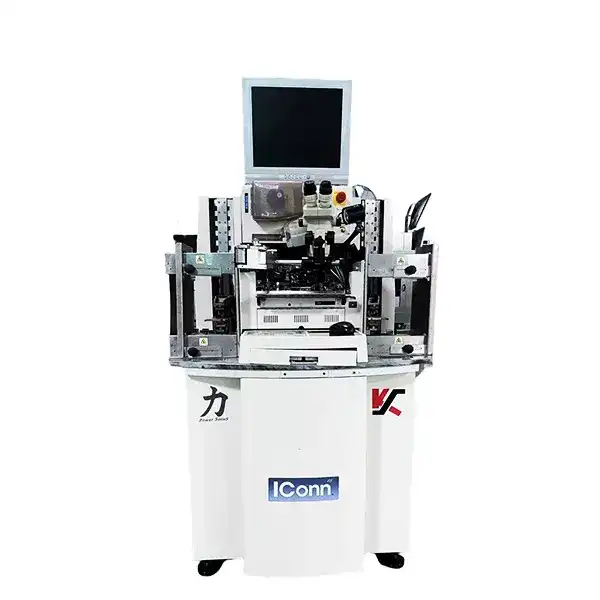
| Automatic Ball Wire Bonder | K&S IConn / ProCu, Maxum Plus, ASMPT Eagle, Kaijo FB-x26 | $18,000 – $58,000 | $85,000 – $145,000+ | Gold vs. ProCu copper kit, vintage, wide-strip handler, fine-pitch options |
| Heavy Al Wedge Wire Bonder | K&S Power Series / Asterion, Hesse BJ-series | $35,000 – $110,000 | $140,000 – $260,000+ | Bond area size, ribbon kit, inline automation, ultrasonic head hours |
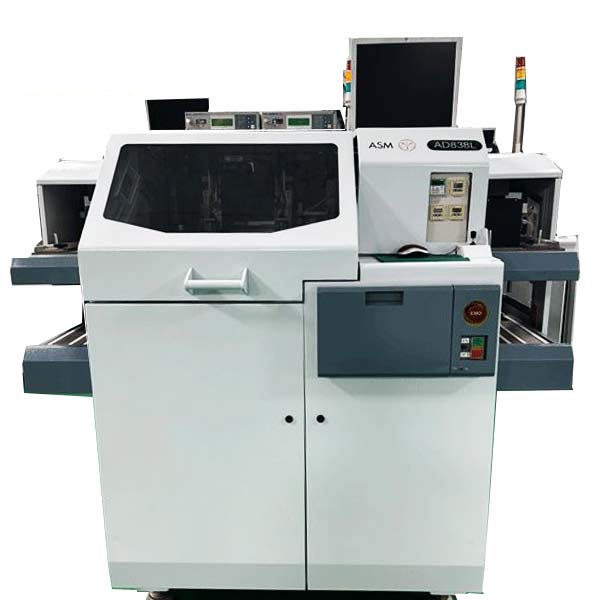
| Epoxy / DAF Die Bonder | ASMPT AD830 / AD838L / AD8312Plus, ESEC 2100 hS | $22,000 – $95,000 | $120,000 – $260,000+ | 8" vs. 12" wafer table, up-look PR optics, DAF heated stage, writing dispense |
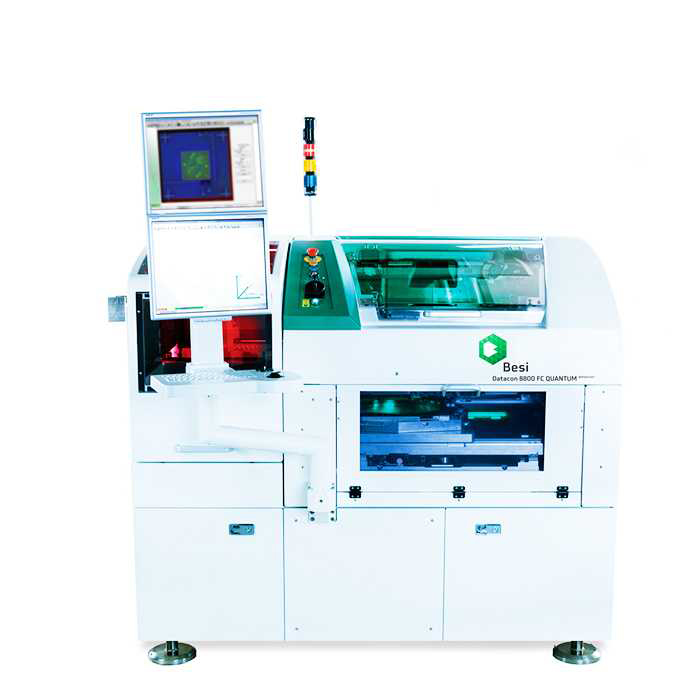
| Multi-Chip / Flip Chip Bonder | Besi Datacon 2200 Evo, 8800 FC Quantum, MRSI-705 | $65,000 – $240,000+ | $280,000 – $750,000+ | ±3 µm vs. ±10 µm class, flux dipper, AWC wafer changer, TCB / eutectic head |
| Wafer Dicing Saw (Blade / Laser) | DISCO DAD324 / DAD3230 / DFD6341 / DFD6361 / DFL7341 | $28,000 – $185,000 (Laser: $160k–$450k+) | $130,000 – $900,000+ | Single vs. dual spindle, 8" vs. 12", spindle kW rating, NCS & laser source hours |
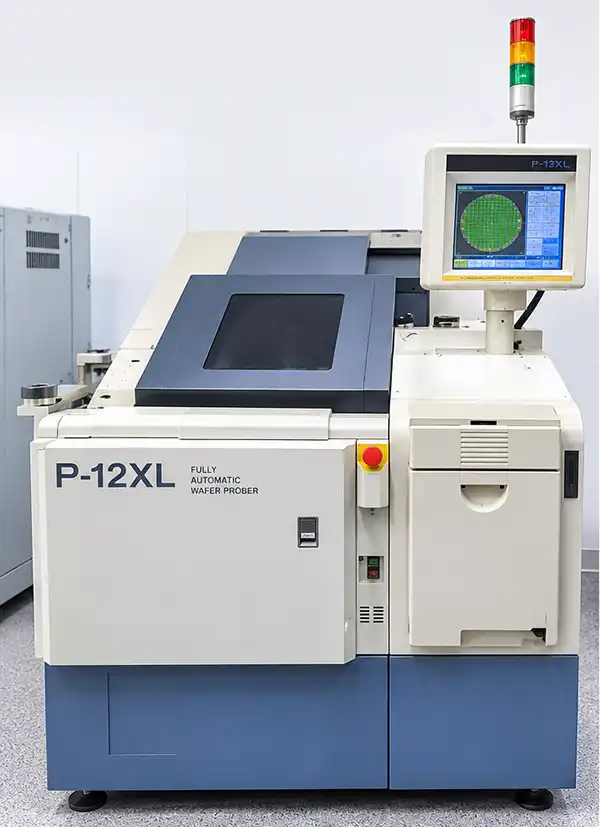
| Wafer Probe Station / Auto Prober | Manual/Semi-Auto lab; TEL P-8 / P-12XL; ACCRETECH UF200R / UF3000EX | Lab: $12k–$45k; Auto 8"–12": $42,000 – $165,000 | $180,000 – $480,000+ | Ambient vs. tri-temp (-40°C/+200°C) chuck + chiller, 200mm vs. 300mm FOUP |
| Plasma Cleaning Equipment | Nordson MARCH AP-300 / AP-600, PVA TePla IoN 200 | $16,000 – $55,000 | $65,000 – $160,000+ | Chamber shelf volume, dry pump included, Faraday shield, MFC channel count |
| Vibratory Bowl Feeder (Custom) | Custom ESD QFN/SOT/LED/SMD bowl + linear track + digital drive | $2,800 – $14,500 (New custom engineered) | $6,000 – $22,000+ (OEM branded) | Package micro-size, multi-orientation optical sensors, ESD coating & handler sync |
Why Two Quotes for the Exact Same Model Diverge by 40%+
When reviewing a wire bonding machine price, probe station price, or wafer dicing machine price, procurement teams should immediately separate three distinct supply tiers so apples-to-apples comparisons hold up:
- Tier 1 — As-Is / Ex-Fab De-Installed: Lowest upfront ticket price (often 20–35% below run-off tools). Best reserved exclusively for large OSATs with in-house maintenance teams and spare board cribs who accept unknown board, spindle, or sensor repair risk.
- Tier 2 — Inspected & Power-On Functional Tested: Machine initializes cleanly under power with verified serial plates, software screens, axis homing, and written disclosure separating verified assemblies from untested process options.
- Tier 3 — Fully Refurbished & 72-Hour Run-Off Verified: Complete teardown, wear-part replacement (belts, filters, seals, aging caps), full optical/mechanical calibration, 72-hour continuous dry-cycle or sample run-off video, and written 6-month major-parts warranty.
How to Request an Accurate, Fast Semiconductor Equipment Quotation
Instead of asking for a generic "price list," share five concrete engineering inputs in your first inquiry—you will cut quoting time from five days down to 24 hours and avoid mismatched machine configurations:
- Exact OEM model or target process metric (e.g., ±10 µm epoxy die bonder for 8-inch silicon, or dual-spindle 12-inch saw).
- Wafer diameter (6", 8", 12") and substrate/package format (leadframe width, JEDEC tray, waffle pack, or carrier tape).
- Required process options (copper forming-gas kit, up-look PR, -40°C/+150°C thermal chuck, SECS/GEM).
- Preferred supply condition tier (As-Is vs. Inspected vs. Refurbished with warranty) and target delivery window.
- Destination port/airport and facility electrical voltage/frequency (e.g., 208V 60Hz vs. 380V 50Hz).
Explore Live Equipment Categories & Direct RFQ Channels
Frequently Asked Questions
How much does a used wire bonder typically cost in 2026?
A verified automatic gold ball wire bonder (such as a K&S Maxum Plus, Kaijo FB-series, or early K&S IConn) typically ranges from $18,000 to $35,000, while factory-built fine-pitch copper platforms like K&S IConn ProCu or late-model ASMPT Eagle Aero units generally fall between $35,000 and $58,000 depending on options and refurbishment depth.
What drives wafer dicing machine price differences on DISCO saws?
The biggest step jumps are single-spindle 8-inch (DAD324/DAD3230) vs. dual-spindle 8"/12" (DFD6341/DFD6361), spindle power rating (1.8 kW vs. 2.2+ kW high torque), spindle bearing condition, and blade vs. stealth laser architecture (DFL7341).
Why is vibratory bowl feeder price quoted per package sample rather than flat rate?
Every semiconductor bowl feeder requires custom CNC-milled orientation tracks, ESD static-dissipative liners, optical verification sensors, and handler escapement synchronization tuned specifically to your package's physical weight, lead geometry, and target PPM feed rate.
Can GK-SEMI credit our idle surplus machines toward replacement equipment?
Yes. Through our Direct Equipment Buyback & Trade-In program, we appraise your surplus bonders, saws, probers, or handlers in 24–48 hours and apply the agreed valuation directly toward upgraded tools from GK-SEMI inventory.